Employee Interviews: Preparing for Effective Responses
Reading time: approx. 4 min
In the realm of corporate storytelling, employee interviews are among the most powerful assets for communicating a company's true value. However, simply asking a set of questions often results in formal, "corporate-approved" answers that lack soul. What truly resonates with readers are the words that reveal personal passion, struggle, and human authenticity. This guide outlines specific preparation steps to ensure your interviewees feel natural and provide the deep insights your brand needs.
1. Clearly Define the Interview Objective
The first step of preparation is defining exactly who you want to reach and what you want them to feel. There is a vast difference between an interview meant to showcase professional achievements and one designed to convey the internal company culture or the nuances of skill transfer between generations.
Approaching an interview with vague goals often leads to scattered conversations. In the editing phase, this manifests as a lack of a clear "takeaway" for the reader. It is crucial to design the desired emotional impact first, then build a storyline that leads the interviewee toward those authentic revelations.
2. Psychological Safety and Initial Approach
Many employees feel an immediate sense of anxiety when they hear the word "interview." The pressure to say something "impressive" or "correct" often forces them into a formal persona, stripping away the individuality that makes a story compelling.
When reaching out to your team, emphasize the following points to lower their guard:
- Perfect answers are not required; natural, conversational language is the most valuable.
- Provide a broad concept of the article's direction so they aren't guessing.
- Clearly state the duration, location, and the fact that they will have a chance to review the draft.
Establishing psychological safety—the belief that it is okay to speak in their own voice—is the fastest route to obtaining high-quality, honest responses.
3. Strategic Question Design: The Power of Open Questions
Avoid closed questions that can be answered with a simple "yes" or "no." Instead, center your dialogue around open-ended questions starting with "how" or "why." The goal is to dig into the emotional shifts and the reasoning behind specific decisions.
For example, instead of asking "Do you enjoy your work?", try "Can you describe a specific moment in this role when you felt a genuine sense of accomplishment or excitement?" By prompting for specific episodes, you provide the text with the concrete evidence and persuasion needed to engage a reader.
4. Choosing the Right Location in Kita-ku, Osaka
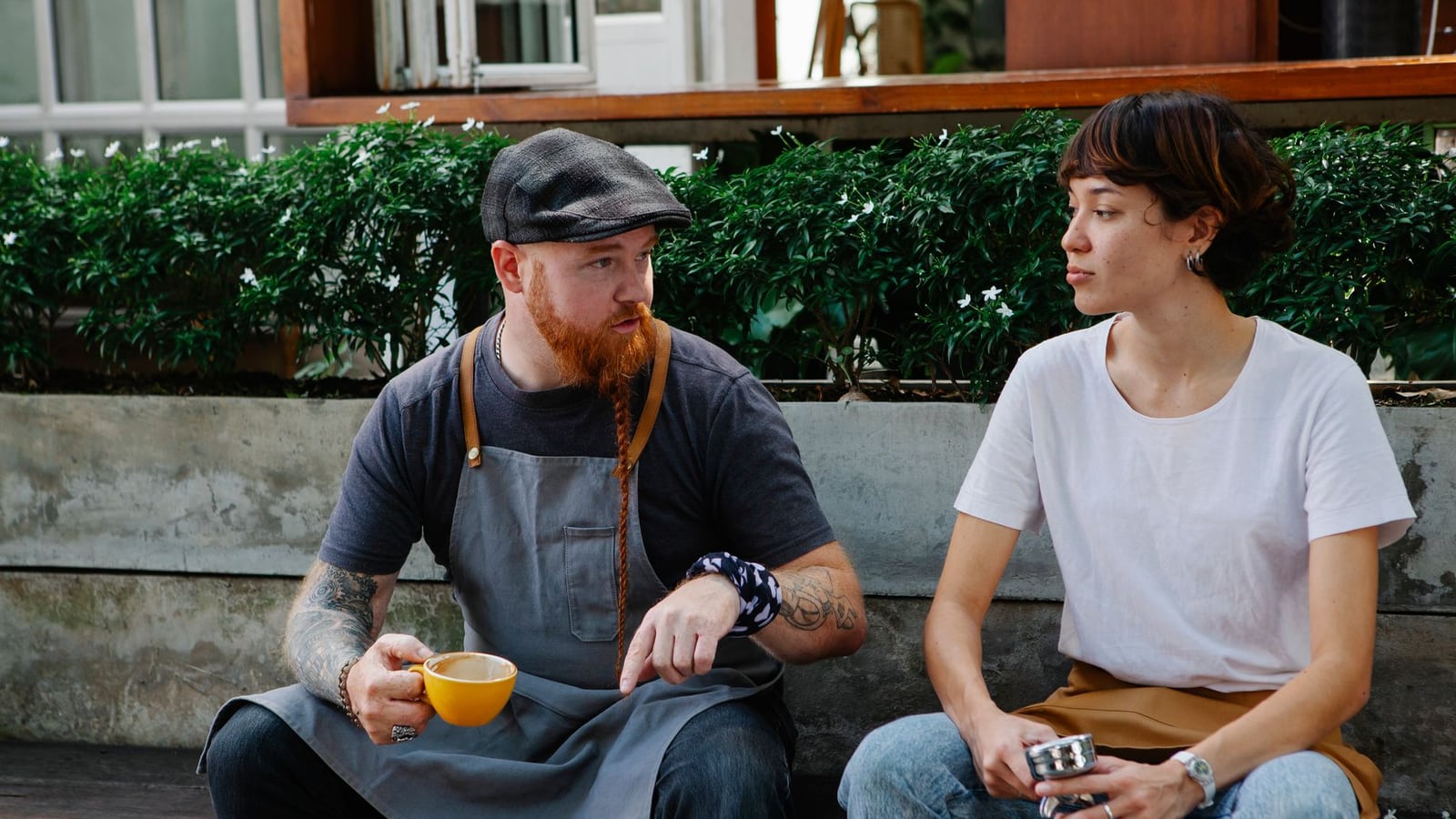
The environment directly influences the quality of the answers. While a corporate meeting room is efficient, it often keeps the interviewee in "work mode," leading to stiff, formal responses. We recommend leveraging the unique atmosphere of Kita-ku, Osaka, to break this pattern.
Conducting interviews in a quiet cafe around Nakanoshima or in the open, airy spaces of the Kita district can foster a relaxed mood. Interestingly, a moderate amount of ambient city noise can actually help a subject relax and speak more freely than a sterile silence. However, for discussions involving strict confidentiality, securing a private room remains essential.
5. The Art of Active Listening and Probing
Your prepared question list should be a map, not a script. The real magic happens when you notice a "glitch" in the narrative—a sudden change in tone, a moment of hesitation, or a surge of energy in the subject's voice.
Following up with, "I noticed your tone changed slightly just now; could you tell me more about that?" allows you to uncover the most valuable anecdotes that were never in the original plan. Respecting silence is also a skill; giving the subject time to search for the right word often leads to the most profound insights.
6. Interview Preparation Checklist
| Preparation Item | Key Verification Point |
|---|---|
| Objective Definition | Are the target audience and core message clearly defined? |
| Initial Outreach | Has the concept been shared to alleviate the subject's anxiety? |
| Question List | Are open-ended questions prioritized with room for deep-dives? |
| Environment | Is the location conducive to relaxation (e.g., a cafe in Kita-ku)? |
| Equipment | Are recording devices tested and is there a backup plan? |
Summary: Stories are Made in Preparation
A great interview article is the result of preparation rather than just the interviewer's skill on the day. By showing respect for the subject, arranging a comfortable environment, and designing the right questions, you create a foundation for a story that enhances your corporate brand value through authenticity.
If you feel that designing these deep-dive interviews and transforming them into professional articles is beyond your current internal resources, consider integrating a professional editorial perspective.
Further Reading
To ensure your writer understands your vision and delivers results that exceed expectations, a precise initial brief is essential. We recommend reading our guide on this topic.
→ How to Write an Effective Brief for Your Writer